Search results for
tipstools tips 2008 04 how to chop sticky foods
Filter Results
Sort By:
Recipes
(247)

Recipes
Bone-in, skin-on chicken legs glossed in a sticky honey mustard glaze strike the perfect balance of tangy, sweet, and delightfully savory.

Quick
Recipes
This refreshing, saucy cucumber salad will cool you down all summer.
4.3
(4.27)

Quick
Recipes
You’ll want to put this aromatic coconut topping on everything.
5.0
(5)

Recipes
A warm, sultry peanut sauce makes even bean sprouts feel indulgent. Learn how to make this recipe and more in our online cooking class with Sur la Table.
5.0
(4.91)

Easy
Recipes
Grab a jar of apricot jam to make these glossy, sticky-sweet sheet-pan chicken legs.

Recipes
Comfort food at its finest, this layered casserole features fried rice, flavorful pork chops, and a punched-up tomato sauce under a blanket of melty cheese.
2.7
(2.67)

Recipes
For the quick pickles, try using other crisp vegetables, such as radishes, celery, or fennel.
4.0
(3.84)

Recipes
Little, light, and fluffy, these crumbs are the perfect topper for delicate salads that can't handle big honkin' croutons.
5.0
(5)

Recipes
As the name implies, shallow-frying requires more fat than pan-frying or sautéing but not as much as deep-frying. When they are to be shallow-fried, most foods are first coated with breadcrumbs or covered (or dredged) in flour. This coating turns golden brown and seals in juices resulting in such crisp, succulent dishes as fried chicken, breaded pork cutlets, fried zucchini, and sole in breadcrumbs. The goal is a light, even, unbroken coating. To dredge, first season the food with salt and pepper, and drag it or toss it in flour, shaking off any excess. Some foods, such as thin fillets of fish, are then fried directly. Other foods, particularly those that take longer to cook, such as pieces of chicken on the bone or a whole fish, benefit from resting an hour or so after dredging to allow the floured surface to dry and firm up. Don’t let the pieces touch one another or the coating will stick and tear when it is time to cook. (An easy way to flour chicken is to put the flour in a strong paper bag, add the chicken and shake.) Breadcrumbs burn more easily than flour and are best applied to meat and vegetables that have been cut thin enough that the interior will be cooked by the time the crumbs have browned. Season the meat or vegetables with salt, pepper, and any herbs or spices, as desired. For breadcrumbs to stick, the food needs to be evenly moist. First dredge it in flour, dip it in egg beaten with a little water, and then roll it (or pat it) in dry fresh breadcrumbs. (Coarse cornmeal can be substituted for breadcrumbs.) To keep your fingers from getting breaded along the way, use one hand to roll the food in the flour and crumbs and the other to dip it in the egg mixture. A breadcrumb coating will be crisper if allowed to rest an hour or so before cooking. Once again, be sure that the breaded pieces are not touching one another while they rest. For shallow-frying, choose oils with a high smoking temperature, such as pure olive oil or peanut oil, or clarified butter, which adds rich flavor. Or use a combination of oil and clarified butter. Lard, suet, duck fat, and schmaltz (chicken fat) are all distinctively flavorful frying fats. Potatoes, one of the few foods that don’t need to be floured or breaded before being shallow-fried, are especially tasty when cooked in a combination of clarified butter and duck fat. A heavy pan heats the fat evenly, and it should have low sides, for easy turning and to prevent steaming. The pan must be filled with enough fat to come halfway up the sides of what you are cooking. For most shallow-frying, that will be 1/4 to 1/2 inch deep. Otherwise the coating will get soggy and not cook along the edges where the oil didn’t reach. Heat the oil until it is hot but not smoking and gently add the food. Don’t crowd the pan; fry in batches if necessary. Cook until brown and crisp, then turn and cook until crisp on the other side. Monitor the heat, turning it down if the food is browning too quickly and turning it up if there is no browning after a minute or two. If fat is absorbed during the cooking, add more as necessary to maintain the proper level. Food that takes a while to cook, such as chicken, may need to be turned a few times. Remove from the pan when cooked and drain well on paper or an absorbent towel before serving.
Easy
Recipes
Lower in sodium than commercially baked chips, these crunchy snacks are very easy to make, especially if you have a mandolin or a food processor to slice the veggies quickly and uniformly.

Recipes
A warm, spicy peanut sauce makes even bean sprouts feel indulgent in this crispy, crunchy bowl.
Articles
(217)

Culture
Perfect poached eggs, softened butter in a flash, and more hacks from the internet.
Christina Chaey

Cooking
For Readers' Choice Week, you shared ways to save time and sanity in the kitchen.
Alyse Whitney

Cooking
This new recipe for spicy steak lettuce wraps needs to be on your summer dinner list.
Alyse Whitney

Cooking
I spent 30 years measuring sticky ingredients like a fool.
Ella Quittner

Cooking
Or fruit—it’s that flexible.
Olia Hercules

Cooking
From smashed potato chips on salad to Cheez-It crumbs on pasta.
Rebecca Firkser
Videos
(258)

icon
Today, actor Glen Powell sits down with Bon Appétit to eat his favorite meals and talk all things acting, fitness and Texas. Join Powell as he discusses the confidence boost he received from Denzel Washington early on in his career to running tips from Tom Cruise—all while tucking into his favorite foods.
Glen just announced the launch of his first-ever brand venture, Smash Kitchen - a line of organic pantry staples designed to modernize the American pantry.
Glen just announced the launch of his first-ever brand venture, Smash Kitchen - a line of organic pantry staples designed to modernize the American pantry.

icon
Ever wonder what to do with those leftover veggie scraps? We have your answer: pickles! This is the perfect way to put some crunch in your lunch.

icon
Join pro chefs Brad Leone, Harold Villarosa, Tiana Gee, Chris Morocco, Kendra Vaculin and DeVonn Francis as they debate the merits of 11 common cooking tips and tricks in the Bon Appétit Test Kitchen. Does adding oil to your pasta water prevent the noodles from sticking? Does the crispiest bacon start with a completely cold pan? Find out which bits of wisdom our pro chefs are in accord with and which ones they reject on this episode of Test Kitchen Talks.

icon
Bon Appétit asked 8 of NYC’s top chefs to share their best kitchen tips to help you cook smarter at home. From mastering mise en place to sharpening knives with a whetstone, and using tools like a microplane, thermometer, and food processor–these are the essential chef secrets every home cook should know.
icon
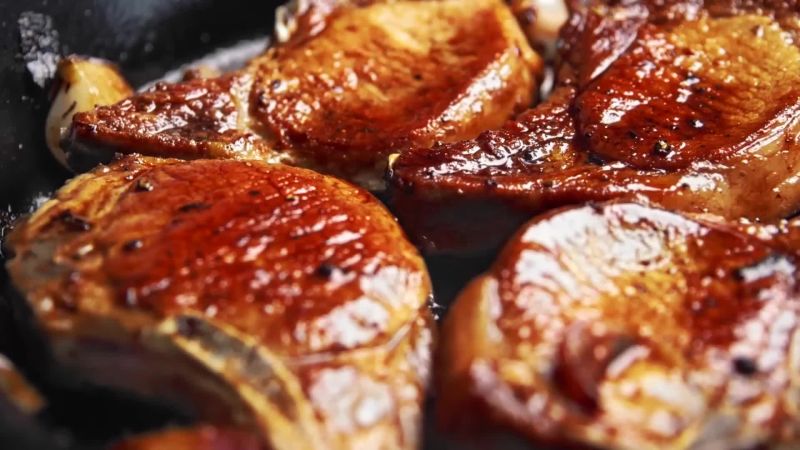
We show you how to make balsamic-glazed pork chops.

icon
Although we're pretty partial to this particular salad, the combo of crunchy veg + lettuce + creamy cheese + pulled protein + crispy topping is universally delicious. Make it your own by swapping in your favorite cheese or any leftover protein, or go ahead and use the all-purpose vinaigrette on just about any salad you can dream up.