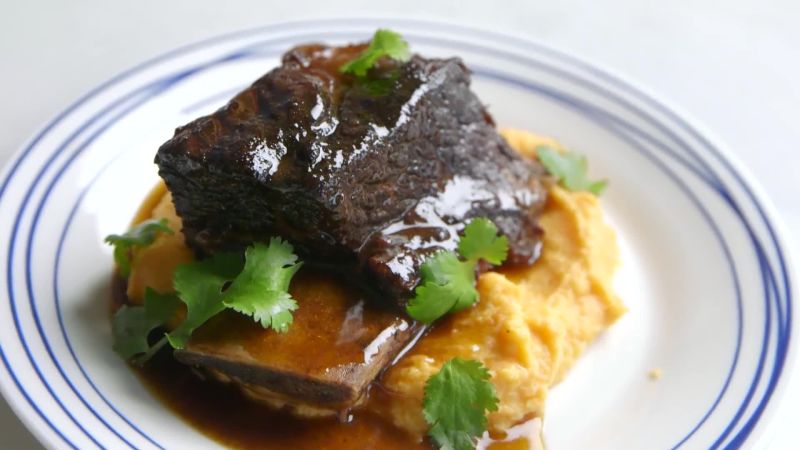
This is definitely a special-occasion cut of meat, but there is absolutely no better way to cook it than in the convection oven. Cooking time will be reduced by one-third to one-half to achieve the doneness you prefer. Use the probe that comes with your oven, or follow the timing and check doneness with a meat thermometer inserted into the roast or with an instant-read thermometer.
A prime rib roast is such a great way to feed a crowd—it’s always on my Christmas dinner table. Sure, it’s delicious and decadent, but what most people don’t know is that it’s easy as hell to cook on a smoker or grill. Note that there are two separate cuts that are considered “prime rib”: The first cut (ribs 1 through 3) is closer to the loin and thus more tender and less fatty. The second cut (ribs 4 through 7) is closer to the chuck end and is denser and fattier. Ask your butcher for the first cut—it’s worth it—and buy the very best quality beef, with the most marbling, that you can afford. The recipe I’m giving here is for a smaller roast, but the same technique (with a slight adjustment on the time—a good rule of thumb is to allow about 30 minutes per pound) can be applied to a prime rib of any size.
Elegant and timeless, roasted prime rib is my idea of the quintessential dinner party centerpiece. The best part is that, unlike many other “fancy” dishes, it couldn’t be easier—just pop the roast in the oven and let it do its thing. The meat should be allowed to marinate at least one full day or night, but if you have the time, let it dry in the refrigerator for up to two days; doing so tenderizes the meat and intensifies the flavors. Either way, ask the butcher to leave the bones attached to the meat, which ensures that the roast will be juicy and flavorful.
This is truly the anti-vegetarian dish. Prime rib is one of those classics you can pull out that will always blow people away. It’s a good special occasion dish, so good that the occasion may be nothing at all. When ordering the rib roast from a butcher, be sure to request a “top choice” roast cut from the small loin end, the best being ribs 12 through 10. Have the butcher cut off the chine (backbone) to make carving easier. The rib bones look best if they are shortened and frenched (the butcher will be happy to do this for you as well, unless he’s a sourpuss, in which case get a new butcher). The wild mushrooms alone make a great all-purpose side dish.
Coarsely cracked Peppercorn Mélange is the key ingredient in the spice rub for this special-occasion beef rib roast. The seasonings flavor the meat and develop a spicy crust. Be sure to allow a 15-minute standing time before carving so the meat temperature will rise and the meat will carve more easily.
Join Chef Harold Villarosa as he demonstrates the proper technique for slicing different cuts of beef, poultry, and pork. Unkle Harold lays out the hows and whys behind serving up different kinds and cuts of meat, relaying all the know-how you need to present your proteins like a pro.
Contributing food editor Alison Roman shares her technique for any braised meat. A quick sear before roasting adds flavor to the final product and a simple ragu makes the pork ribs into a meal.
Got nothing but time on your hands? Cook these really low and slow. Set the oven at 300° and start checking the ribs after 3 hours. But don’t sweat it; they’ll be super-tender either way.
Join Carla in the Test Kitchen as she makes Instant Pot ribs.
Check out the recipe here: https://weigt-finish.today/recipe/instant-pot-glazed-and-grilled-ribs%3C/div%3E%3C/div%3E%3C/div%3E%3C/div%3E%3C/div%3E%3C/div%3E%3C/div%3E%3Cdiv class="StackedRatingsCardWrapper-RIFgn jsPKbl SummaryCollectionGridSummaryItem-ilztYA cpHIzM search_result_item-588f68448a76f7010f24e632">